Online Release
Artist Talk
Matthieu Orléan und Christoph Hochhäusler:
City in Film
Der Talk fand am 18. Oktober 2025 im Projektbüro DFI e.V. statt, wurde auf Englisch gehalten und wird hier ebenfalls in englischer Sprache wiedergegeben.
Christoph Hochhäusler, in Berlin lebender Filmemacher, und Matthieu Orléan, Kurator an der Cinémathèque Française, diskutieren, wie Städte im Film durch spezifische räumliche Anordnungen und filmische Strukturen in Erscheinung treten: die Metro, der Park, das Fenster, der Zug.
Ausgehend von Filmen aus unterschiedlichen urbanen Kontexten und Epochen – etwa Berlin: Symphony of a Great City (1927), Le Métro (1934), News from Home (1976) oder Blow-Up (1966) – untersuchen sie, wie Bewegung, Dauer und räumliche Begrenzung filmisches Erzählen prägen und sich dabei zwischen dokumentarischer Beobachtung und fiktionaler Konstruktion bewegen. Die Stadt erscheint dabei nicht als bloße Kulisse, sondern als materielle Bedingung, die sowohl die Herstellung als auch die Wahrnehmung von Filmen formt.
Das Gespräch war Teil der Ausstellung Stuke, Sieber, Takano: Towards the City. Host: Moritz Wegwerth


Matthieu Orléan: Thank you, Katja and Oliver, and thank you, Moritz, for bringing us together.
For me, the topic was immediately huge—and I think Christoph felt the same. Speaking about the city means dealing at once with landscape, transformation, displacement, social questions, time and human trajectories. Looking at this through cinema only expands the field further, since there is an enormous body of films that approach city centers and outskirts as both emotional and social spaces.
I quickly realized that it would be impossible to address all of this at once. So I felt I had to concentrate on something very precise, something sharp enough to allow the conversation to unfold. I chose the metro and the circulation of the metro as a guiding theme, knowing that it resonates strongly with your work.
Recently, you gave me your book La Ville Invisible / The Invisible City. On page two there is an image of the monorail in Osaka. There is also a whole chapter titled “Station to Station,” which looks closely at the transformation of Paris and the rethinking of the metro as a public system—at how these changes have affected urban space, mental landscapes and physical experience in a very paradoxical way.
Everything about this theme feels paradoxical—it really invites analysis, and I found that quite exciting. It’s paradoxical because it’s about both stagnation and alienation, but also movement and connection. In the Western world, the metro has sometimes been seen as a place of shelter—during World War II, for example, it served as refuge in many major cities. That idea has stayed in the minds of many of the artists I’m referencing today. But the metro isn’t only a shelter; it’s also a space of danger, of the underground, of hidden connections. It holds many layers that aren’t immediately obvious, and I think cinema can help us understand these dimensions more deeply.
That’s why I decided to focus on this theme—exploring it through the gaze of filmmakers from the 20th century, particularly the postwar period. The corpus of films is, of course, enormous. Even in the 1920s, the city was already a major motif in cinema—think of Berlin: Symphony of a Great City by Ruttmann, which was quite influential. But since the topic expands in so many directions, it’s necessary to narrow the focus.
So I decided to focus on filmmakers who combine both documentary and fiction in their work—artists who don’t necessarily worry about separating the two, but instead experiment boldly with form to express the very paradoxes I mentioned earlier. That’s the direction I chose in approaching the theme of the metro.
There’s also a coincidence that connects this topic to my own work. As mentioned, I work at the Cinémathèque française, which was founded in 1936 by Henri Langlois. Langlois had the remarkable foresight—well before most others—of recognizing the importance of preserving what was at risk of being destroyed. At the time, cinema was considered merely entertainment, and for various technical and economic reasons, films were rarely conserved. Many were simply destroyed.
Langlois, however, had the intuition that cinema represented the birth of a new art form, and that everything connected to it—the films themselves, but also posters, drawings, and other related materials—should be preserved. He was truly a pioneer in this regard. Langlois founded the Cinémathèque together with another figure who would later become a well-known filmmaker: Georges Franju. And just to finish my introduction, there’s something quite interesting about Langlois and Franju. Two years before founding the Cinémathèque, Franju and Langlois actually directed a film together—the only film Langlois ever made. It’s called La Métro. This creates yet another connection with the theme I’ve been discussing.
I’d like to show you about a minute of it—it’s a silent film—and then we’ll move on to the rest of the discussion. We’ll probably look at screenshots rather than watch full sequences, since working from stills makes it easier to focus on the visual aspects without being distracted by sound, which can sometimes make conversation more difficult.
So, just to give you a glimpse: La Métro, made in 1934 by Georges Franju and Henri Langlois, consists mainly of images of people moving in and out of the metro. The film captures a kind of visual rhythm reminiscent of Futurist painting—focusing on modernity, movement, and the play of light and shadow as people walk and interact with the space. There’s a strong connection to the visual arts of that period, particularly to artists like Gino Severini.
Interestingly, when the Cinémathèque Museum opened in the 1970s, a painting by Severini was displayed in the lobby—creating a striking echo between cinema and painting, between the movement of film and the frozen dynamism of visual art.
The metro seems to have fascinated filmmakers from the very beginning. As we’ll see with other directors, some have paid tribute to this early work or adapted elements from it. La Métro is quite experimental—it fits within certain traditions of cinema at the time, but it also has clear connections to other experimental films, like Ballet Mécanique or Entr’acte.
Franju and Langlois filmed extensively in the Paris metro, but they weren’t focused on the social or geographical aspects of the space. Instead, they were exploring an abstraction of movement, bodies, and light. The editing is particularly important—it’s not about long static shots, but rather the rhythm and composition created through montage.
This is why I was drawn to the metro as a theme for my work. Between this film, my research, and my work at the Cinémathèque, the spirit of Langlois remains very present. I think it offers a valuable perspective for us to explore today. I won’t go on too long, but many people may not know this film, and it’s a good example because words alone can’t fully capture it. It’s really about experience, movement, and perhaps even a sense of escape.
Christoph Hochhäusler: Maybe I’ll take over here for a minute. I’m a writer and director, and I’m also the editor of a film magazine called Revolver. Publishing, in a way, is connected to the city itself: it’s about avenues of possibility, collecting spaces and images. I think what a city is really about isn’t just one place—it’s a multitude of things, a multitude of possibilities. Essentially, it’s a multitude of ways to live your life. I thought it would be interesting to find a kind of counterweight to the metro-focused films we’ve been discussing. So I chose a few films that deal with parks.
In a strange way, the contradictions we see in the metro are also present in the park. A park is like a “non-city” within the city. It only exists within an urban context—out in the countryside it wouldn’t make sense. In that sense, it’s almost absurd. A park is often a simulation of space, a constructed Garden of Eden, if you will. Yet it also contains a multitude of lived experiences. What you can do in a park is very different from what you can do in a metro, and exploring these contradictory spaces seemed like a fruitful conversation. So I just wanted to add that perspective.
Orléan: And that’s why we thought this comparison could be interesting. The park, of course, is a place where you take your time—it’s about contemplation. The metro, on the other hand, is supposed to be purely functional: a space to go from point A to point B, where time seems irrelevant. But in reality, the metro is also a place where things happen.
All the films I’ll discuss show how the metro is a space of fiction, a site of access to another reality. It’s not just about moving quickly between locations; it’s about experiencing the city, feeling time and space in a new way. The metro is both underground and above ground, offering fresh perspectives on the city.
Many texts and films have explored how the metro—and trains more broadly—function as metaphors for cinema itself: the tracks as the film’s path, the framing of windows as the framing of the camera, the constant movement as cinematic motion. Riding the metro isn’t just about consuming time—it’s about exploring space, narrative, and urban life.
That’s why I thought it would make an interesting thematic focus. I’ll try to present this chronologically, though I’m not a specialist in the history of the metro. Still, it’s clear that the metro has evolved and transformed from the 1950s and 60s to the present, and its representation in cinema has shifted along with it.
I think all the contradictions we’ve discussed have been present since the very beginning, though of course they’ve been emphasized in different ways over time. Political situations have changed, aesthetic approaches have evolved, and cinema has reflected these shifts.
To start, I’d like to discuss a film from the 1960s by Larry Peerce, who mainly worked in television. The film is called The Incident, and it was shot in New York in the 60s. I can’t cover all the American films set in the metro—there are many—but typically, in these films, the subway is the site of an action sequence, a chase, or some highly charged situation.
What’s interesting in The Incident is that the dispositif—the way the film is structured—is very striking, and it actually connects to the next film I’ll mention. Pierce had the intuition that he could make an entire film set only in the metro. The story follows different characters entering the subway, revealing glimpses of their lives. Each character comes from a different area of New York, and the metro itself connects these diverse social spaces—from Harlem to Manhattan, north to south.
So the subway functions as a shared space, uniting people from different backgrounds. The approach is simple, yet very powerful: the film uses the metro itself as a unifying structure, highlighting both diversity and connection within the city.


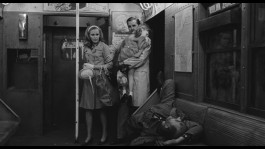

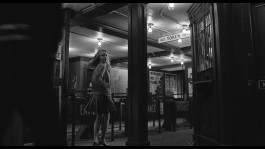


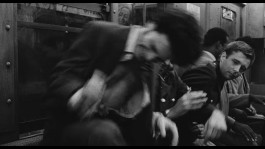


The Incident, directy by Larry Peerce, 1967
The Incident, directy by Larry Peerce, 1967
The Incident, directy by Larry Peerce, 1967
The Incident, directy by Larry Peerce, 1967
The Incident, directy by Larry Peerce, 1967
The Incident, directy by Larry Peerce, 1967
The Incident, directy by Larry Peerce, 1967
The Incident, directy by Larry Peerce, 1967
The Incident, directy by Larry Peerce, 1967
The Incident, directy by Larry Peerce, 1967
The Incident, directy by Larry Peerce, 1967
The Incident, directy by Larry Peerce, 1967
The Incident, directy by Larry Peerce, 1967
The Incident, directy by Larry Peerce, 1967
The Incident, directy by Larry Peerce, 1967
The Incident, directy by Larry Peerce, 1967
The Incident, directy by Larry Peerce, 1967
The Incident, directy by Larry Peerce, 1967
The Incident, directy by Larry Peerce, 1967
The Incident is unique for its time—it’s one of the very few films shot entirely in the metro. The story revolves around a pure fiction: two men with violent backgrounds who plan to assault people in the subway. The film unfolds largely around the arrival of these characters and their confrontation with the travelers.
What’s also interesting is that Larry Peerce didn’t get any authorization from the New York Transit Authority to film. The authorities considered the movie too violent and didn’t want to show how dangerous the metro could appear.
This highlights one of the metro’s core contradictions. On one hand, it’s a place of refuge—a moment for yourself, a space to concentrate, almost a private mirror in the midst of the city. On the other hand, it’s underground, dark, and sometimes dangerous, a space of vulnerability.
To work around this, all exterior shots of the metro were filmed in Brooklyn from different buildings, so those were real. But the interior shots of the metro itself had to be recreated; they used sets and plans to reproduce what the subway looked like at the time. This combination of real and recreated spaces reinforces the film’s tension between reality and fiction, safety and danger.
They actually rebuilt the metro as a mockup in the studio—a detailed model. They added lighting and, every 48 seconds or so, accelerated the lights to create the illusion of speed, so it feels like the train is moving through a tunnel, even though everything is completely fake.
Other films I’ll mention later often involve real subway locations, even when they’re not purely documentary, which is important. But The Incident, being entirely fiction, moves between reality and constructed reality. You see some characters entering the metro in real settings, but the interior sequences were all recreated in the studio. This made it quite innovative at the time.
There’s also a recurring character who doesn’t speak throughout the film: a drunk man sitting quietly. He functions as a sort of invisible witness, unnoticed by everyone else. By the end, when all the other characters leave safely, he’s still there, waking up to a world of events he hasn’t really perceived. It’s a haunting reminder of presence and invisibility in the metro. So, to summarize quickly: while some shots feel very real, the interior sequences are entirely staged. It’s a fake metro, but it conveys a strong sense of danger, tension, and narrative possibility.
There’s also a parallel here with cinema itself. The metro acts like a kind of time capsule: once you step onto the train, you’re committed to the ride until you emerge again into the light. You enter the dark, so to speak, and this contained time is crucial for many films.
This isn’t just true for subway films—train films more broadly have a long-standing love affair with cinema, and it goes back to the very beginnings of the medium. Part of the reason may be that trains are machines that organize our gaze. Even if we ourselves aren’t moving voluntarily, we are carried along, observing what passes by: different people, different social spaces, different moments. The train structures how we see the world, much like a camera does.
The characters in The Incident are largely disconnected from one another. The only real connection between them is the presence of violence. Each person exists in their own world; they’re not interacting or communicating. The danger is so intense that it overrides all other forms of connection.
In later films I’ll discuss, the metro can be a place of connection, but in this case, it’s a space of isolation and tension. The metro here still represents a “mixed city,” since the train passes through many different neighborhoods, yet the interactions remain limited.
For example, there’s an African American couple on the train. The two violent men who create the conflict are the “bad guys.” However, the film also addresses racism in a very direct and realistic way. At the end, when the police arrive, they try to arrest the Black man instead of the violent assailants. Only by intervening does he avoid being wrongly targeted—a stark commentary on the racism of that time in the U.S.
This theme reminds me of George Romero’s Night of the Living Dead. There, the African American protagonist successfully fights off the zombies, but when he emerges from the house, the police immediately shoot him, assuming he is the villain because of his race.
Returning to The Incident, the film emphasizes movement and violence. The camera often closes in on faces, following characters as the tension escalates, creating a claustrophobic and intense experience that draws the viewer into the emotional and physical dynamics of the metro.
Hochhäusler: I think in every film there’s always this question: you find a material that attracts you, and then you need a device—sometimes a plot, sometimes a visual device—to cut through that material. That’s where it becomes really interesting, because suddenly you have an inside and an outside. Connections appear that are otherwise unnatural. In a way, this is similar to how a street cuts through a city—an unexpected, almost random way of linking things together.
This is one of the central questions in art, and especially in narrative cinema: how do things connect? How do you link the beginning, the middle, and the end? Why do these characters meet? Is chance enough to hold them together?
The confined, locked space of the metro becomes a tool in this regard. It forces characters together who would have no reason to encounter each other outside this space. The constraints of the setting create both tension and connection, making it a uniquely effective environment for narrative experimentation.
Orléan: Have you ever shot a sequence in the metro or in the train?
Hochhäusler: In The Lies of the Victors, I shot a scene in a real metro carriage in Berlin. We didn’t have the budget to build a wagon, and shooting in a real metro is one of the most stressful environments imaginable. You have a very limited window of time between stations, and if you don’t construct the whole set, you can’t control the crowds—people will walk into the frame, look at the camera, and generally disrupt the shoot. It’s a constant hustle, and extremely nerve-wracking.
We also faced practical challenges, like displays inside the train showing the station names. You can’t film without them appearing in the shots, so we had to replace or cover them. These are the kinds of everyday technical problems in cinema that you have to solve on the spot, especially in a location as complex and constrained as the metro.
Orléan: To finish, I want to mention another film. It’s short, but visually striking—each frame is carefully composed, especially with the lighting. The train has a pure, moving light in the city, creating a striking contrast between darkness and illumination. It reminds me, in a way, of Andy Warhol’s Empire. I’m not suggesting a direct connection or narrative influence—Empire was hard to see at the time—but both films share a concern with the modernity of the U.S. city, its darkness, its light, and its sense of power. The city becomes both shining and dangerous, a symbol of capitalism, yet also a site of connection.
The Incident, though not radical in the same way as Warhol, pushes its own boundaries by being set entirely in the metro. It’s a fictional work, but in a way symbolic. I think the comparison is interesting: both films explore urban space as a site of visual experimentation and meaning. The metro, with its play of light and shadow, becomes a powerful symbol of New York itself, both beautiful and threatening.
Hochhäusler: I’ll start by talking about a rather unusual film. Some of you might know it—it’s by Ray and Charles Eames. They were primarily designers and architects, now most famous for the Eames chair, but they also explored many artistic endeavors, including film. Their work in cinema is fascinating.
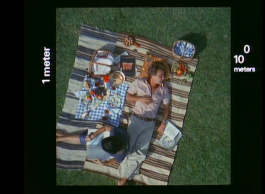
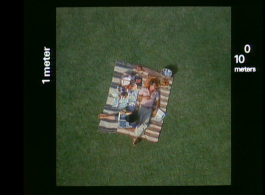
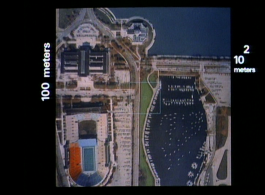
One film in particular, made for IBM, is especially well-known: Powers of Ten. It’s essentially one continuous zoom in and out of a park in Chicago. The film explores concepts of scale and relativity. At the time, the continuous zoom we see today wasn’t technically possible, so the filmmakers simulated it—something that now seems easy with tools like Google Earth, but was extremely complex in the 1960s.
The film begins with a couple in a park in Chicago, showing their space at the scale of one square meter. From there, the zoom expands outward and inward, providing a meditation on size, perspective, and our place within larger systems.
The zoom in Powers of Ten progresses at a constant speed, creating a continuous relationship between time and space. At every power of ten, a blue frame appears on screen, providing a reference for where we are and how far we’ve traveled. There’s also a voiceover by Eames, explaining the relative speeds: “That’s the speed of a car, that’s the speed of a plane,” and so on, giving us a sense of the relativity of motion through time and space.
While this might seem straightforward today, at the time it was incredibly complex to produce. There was no satellite imagery, so the filmmakers had to piece together aerial photographs to create the effect. And when the zoom moves into space, it becomes entirely fictional—they didn’t have the ability to film from orbit, so much of what we see is a carefully constructed simulation of scale and distance.

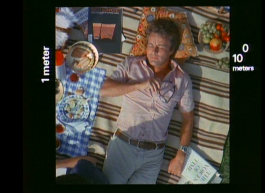




Powers of 10, directed by Charles and Ray Eames, 1977
Powers of 10, directed by Charles and Ray Eames, 1977
Powers of 10, directed by Charles and Ray Eames, 1977
Powers of 10, directed by Charles and Ray Eames, 1977
Powers of 10, directed by Charles and Ray Eames, 1977
Powers of 10, directed by Charles and Ray Eames, 1977
Powers of 10, directed by Charles and Ray Eames, 1977
Powers of 10, directed by Charles and Ray Eames, 1977
Powers of 10, directed by Charles and Ray Eames, 1977
Powers of 10, directed by Charles and Ray Eames, 1977
Powers of 10, directed by Charles and Ray Eames, 1977
Powers of 10, directed by Charles and Ray Eames, 1977
Powers of 10, directed by Charles and Ray Eames, 1977
Powers of 10, directed by Charles and Ray Eames, 1977
Powers of 10, directed by Charles and Ray Eames, 1977
Powers of 10, directed by Charles and Ray Eames, 1977
Powers of 10, directed by Charles and Ray Eames, 1977
Orléan: But IBM was like providing devices, I guess they were working with these.
Hochhäusler: They were working with the best resources available at the time, but the tools we have now simply didn’t exist. Much of the film is essentially animation. The film continues outward to the spiral of the Milky Way, and then back inward, into the skin, and finally down to the level of atoms. It’s a journey through dimensions, from the cosmic to the microscopic. I think Powers of Ten is a remarkable “think piece,” not only about scale and perspective, but also about the city, and more broadly, about life on Earth in relation to space. That’s why I wanted to include it here—it encourages us to consider our place in the larger universe while still reflecting on the everyday spaces we inhabit.
Orléan: The next film I want to discuss was made about ten years after Larry Peerce’s The Incident. It’s very different, but it’s also set in the New York metro, creating an interesting echo. The film is by Chantal Akerman, the Belgian filmmaker who traveled to New York many times and sought to work there in a way that differed from her projects in Belgium.
Akerman had previously made experimental films like Je, tu, il, elle, which had some narrative structure, but she wanted to explore even more experimental approaches, moving beyond classical narrative forms. She was inspired by American filmmakers at the time, such as Jonas Mekas, and by the Canadian filmmaker Michael Snow.
New York became a place of cinematographic rebirth for her. While her style didn’t undergo a radical shift, she used the city as an opportunity to deepen her experimentation and to renew aspects of her filmmaking approach. To realize her projects, she collaborated with Babette Mangold, a cinematographer who was crucial in helping her navigate the technical and creative challenges of filming in both a hotel and the metro.
Filming in the metro presented particular challenges, because you don’t have the controlled lighting of a studio. Akerman had to find 16mm film with very sensitive chemical emulsion to capture beautiful images in low-light conditions—a technical difficulty that required careful experimentation.
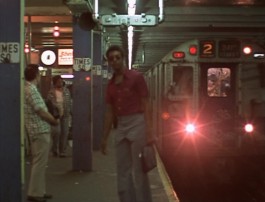
She made several trips to New York, and in 1976 she shot News from Home. The film is composed of a series of fixed, unmoving camera shots of the city. The metro appears repeatedly, providing a kind of visual and rhythmic anchor for the film. The metro gives structure to the work, almost like the pulse of New York itself.
What’s particularly interesting is how Akerman constantly varied her perspective on the metro. Sometimes she filmed from the platform, observing trains as they arrived and departed. Other times she filmed from inside the metro, looking out into the tunnels or at the passengers around her. By continually changing her position relative to the metro, she created a circular, almost 360-degree perspective of the space, presenting it in a more objective and comprehensive way rather than repeating a single viewpoint.



News from Home, directed by Chantal Akerman, 1976
News from Home, directed by Chantal Akerman, 1976
News from Home, directed by Chantal Akerman, 1976
News from Home, directed by Chantal Akerman, 1976
News from Home, directed by Chantal Akerman, 1976
News from Home, directed by Chantal Akerman, 1976
News from Home, directed by Chantal Akerman, 1976
News from Home, directed by Chantal Akerman, 1976
News from Home, directed by Chantal Akerman, 1976
News from Home, directed by Chantal Akerman, 1976
News from Home, directed by Chantal Akerman, 1976
News from Home, directed by Chantal Akerman, 1976
News from Home, directed by Chantal Akerman, 1976
News from Home, directed by Chantal Akerman, 1976
News from Home, directed by Chantal Akerman, 1976
News from Home, directed by Chantal Akerman, 1976
News from Home, directed by Chantal Akerman, 1976
In News from Home, there are sequences where Akerman is inside the moving metro, capturing different stations as the doors open and close. The metro appears repeatedly throughout the film, acting as a recurrent figure or visual motif. Between these metro sequences, there are shots of the city, of cars, and other urban scenes, creating a rich tapestry of New York life.
Unlike Larry Peerce, who couldn’t get authorization to film and had to rely on a studio mock-up with actors, Akerman faced fewer logistical constraints. She used a small, portable camera and didn’t need any actors or a large crew. It was just her and her cinematographer, Babette Mangold. If there was a problem, only the two of them had to manage it.
Of course, people in the metro sometimes noticed her filming and would stare, but this didn’t prevent her from capturing striking images. Her work with natural light, combined with the intimate, mobile camera, created beautiful, nuanced shots of the metro and its passengers.
In News from Home, there’s also a voiceover—Chantal Akerman’s own voice—reading letters written by her mother. These letters reflect her mother’s thoughts on Akerman’s experience of exile, being in a new city, and feeling lost in New York. The letters were written during Akerman’s first trip to the city, and she used them in the second trip for this film.
This highlights that the film is not strictly realistic or autobiographical. It’s not a documentary or a self-portrait in the traditional sense. Even though we hear Akerman’s voice and can recognize it, the film isn’t presenting her as “herself” on screen. Rather, it’s about the connection between the filmmaker and her mother—the nurturing, protective, and guiding presence that her mother represents. The voice acts as a kind of anchor or support while Akerman explores the unfamiliar, cinematic space of the city.
Hochhäusler: There’s also the idea of the “train of thought,” the English expression, which feels particularly apt here. In many films—not just News from Home—the train or images of the metro function as a kind of fluid space where thoughts can unfold.
One striking example is the science fiction film The Silver Planet (Na srebrnym globie, 1988) by Andrzej Żuławski, which was censored in communist Poland. In the places where censorship removed content, Żuławski inserted shots of the Warsaw metro. This demonstrates how the metro can serve as a kind of neutral, reflective space—a place where anything can be thought, imagined, or inserted without restriction.
Orléan: What I find fascinating in Akerman’s film is how she represents the metro—and New York more broadly—not as a vertical city of skyscrapers, but as a kind of horizontal city. The verticality, the towering skyscrapers we usually associate with New York, are largely absent. Instead, the city is experienced in a more flattened, expansive way, which may evoke Europe for her. The letters, her mother’s voice, and the European perspective create a sense of New York as something in between—not fully Europe, not fully the U.S., but a hybrid space.
By breaking the verticality, Akerman emphasizes the horizontal movement of people and interactions in the city. While I wouldn’t call it a place of traditional connection or meeting, it’s certainly not a space of alienation. She’s interested in the metro as a kind of laboratory of social mixing: people of different cultures, races, and styles coexisting and moving together. The metro becomes a space where diverse bodies—queer, Black, and otherwise marginalized—are visible and in motion, forming a dynamic, underground urban ecology.
This is something you don’t often see in films set in the metro. I don’t know how many dailies or rushes Akerman had, or how much she selected, but there’s a special energy in the movie that you rarely encounter in contemporary subway films. It seems that this perspective—as an exile, as a foreigner—allows her to see New York in a unique and extraordinary way.
The gesture is radical. In this film, she is engaging with time in a very pure way: pure movement, pure duration. News from Home is a time experience—the film lasts two hours—and it immerses the viewer in the flow of the city and the passage of time. Akerman made other long-duration films later, like Je, tu, il, elle, but here she is deeply invested in the experience of time itself. She resists fast-paced, conventional narrative rhythms, refusing the artificial codes of classical cinema. Instead, she guides the audience into another dimension of temporal experience, letting the rhythm of the city and the metro dictate the pace of the film.
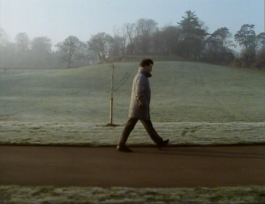
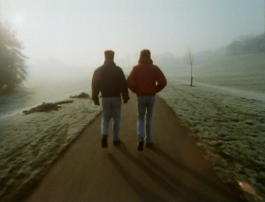
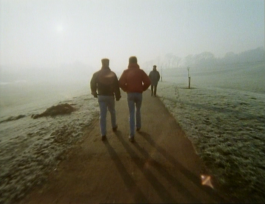
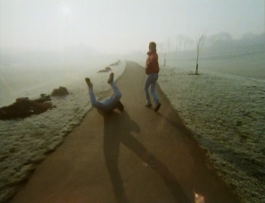
Hochhäusler: I think this connects nicely to Alan Clarke. In 1989, Clarke made a film called Elephant—a title that later inspired Gus Van Sant’s film of the same name, which serves as an homage to Clarke. Clarke was a British filmmaker who mainly worked in television, and this was essentially a TV film.
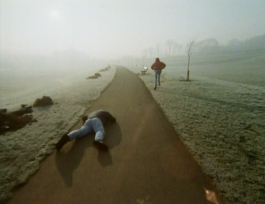
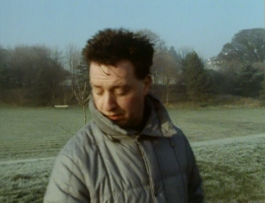
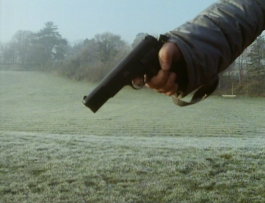
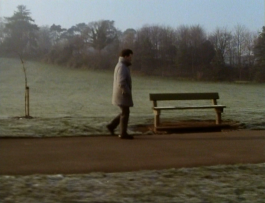
He made extensive use of a then-new technology, the Steadicam, which allowed him to handhold the camera smoothly for long, continuous shots. Elephant depicts the violence of Northern Ireland, restaging real events in mostly unbroken takes.
One sequence takes place in a park. Most of the film is without dialogue, showing people passing through a space, then suddenly a shot is fired. One person flees, another is shot, and the scene continues. We see walkers moving through the park, but their connection or motivation is unknown until the violent act occurs. This kind of objectivity makes the violence utterly shocking, stripping it of context—no social, historical, or personal backstory is provided. The film confronts us with the raw absurdity of violence.
What’s interesting, and why I bring this up, is that the park functions as a space where random movement is natural. People walk through it without suspicion, which allows the camera to capture these acts in long, continuous takes. The park becomes both ordinary and terrifying—a place of circulation, encounter, and unpredictability.









Elephant, directed by Alan Clarke, 1989
Elephant, directed by Alan Clarke, 1989
Elephant, directed by Alan Clarke, 1989
Elephant, directed by Alan Clarke, 1989
Elephant, directed by Alan Clarke, 1989
Elephant, directed by Alan Clarke, 1989
Elephant, directed by Alan Clarke, 1989
Elephant, directed by Alan Clarke, 1989
Elephant, directed by Alan Clarke, 1989
Elephant, directed by Alan Clarke, 1989
Elephant, directed by Alan Clarke, 1989
Elephant, directed by Alan Clarke, 1989
Elephant, directed by Alan Clarke, 1989
Elephant, directed by Alan Clarke, 1989
Elephant, directed by Alan Clarke, 1989
Elephant, directed by Alan Clarke, 1989
Elephant, directed by Alan Clarke, 1989
Elephant, directed by Alan Clarke, 1989
Orléan: Some time ago, in 2005, we organized an exhibition at the Cinémathèque focused on photography and its relationship to cinema. We selected ten photographers and asked them to reflect on how cinema influenced their work. Some reused pre-existing work, others created new projects; some made films, while others worked in very different media.
One of the photographers, Donovan Wylie from Northern Ireland, cited Elephant as a major influence. He remembered watching it as a child. Clarke, who worked primarily in television, had the film screened without much advertisement, likely during a weekday, targeting a general or younger audience. Families would gather to watch it because Clarke was already a well-known figure in British television, having made films like Made in Britain.
Wylie recalled being shocked by the film. The violence is presented without dialogue, without context—no explanation of who is who, no insight into motivations. Even though viewers might understand the broader Catholic-Protestant conflict in Northern Ireland, the stripped-down, almost clinical presentation makes the violence feel stark and extreme. Segments like the shower scene are particularly harrowing, and for a child watching at the time, the impact was profound.
Hochhäusler: The film is so violent because it refuses to give the viewer any comfort—there’s no sense of who is “good” or who “deserves” to die. There’s simply no context.
Sometimes, you don’t even know who will be affected next. There’s a person walking through the city or the park, and at first, you might identify with them because they appear first on screen. But as the scene unfolds, that same person could be the victim—or the perpetrator. The film constantly shifts perspective, keeping the viewer off balance. It’s a deeply unsettling and challenging movie, precisely because it refuses to offer clear moral or narrative guidance.
But again, this connects to the idea I mentioned earlier about “cutting through a material.” In this case, Clarke was working with real incidents—the killings were well-documented, and he researched the locations carefully. The film is fictionalized, yet it’s organized around these factual elements.
This raises a crucial question: are the connections between events meaningful, or is the true horror found in the apparent meaninglessness of the violence? The film forces the viewer to confront this ambiguity, making the experience of the violence all the more disturbing.
Orléan: I also want to highlight a French film that may be less known: Duelle by Jacques Rivette, made in 1976, the same period as Chantal Akerman’s work. Rivette, one of the leading figures of the Nouvelle Vague, is often considered one of the most radical filmmakers of that movement.
Even though Akerman’s approach is extremely radical—showing the city, its people, and the flow of time in a largely uncategorized way—Rivette takes almost the opposite approach. What makes it interesting is that they likely share some intellectual background and ideas about cinema, even if their methods differ. Rivette was not a nomad like Akerman; he stayed in Paris and created films deeply rooted in that city. Many of his films take place in the metro, and Duelle is a prime example. The title itself is difficult to translate, as it doesn’t carry a simple equivalent in English, reflecting the nuanced and layered nature of the film.
The title evokes a “duel,” but feminized in a way that makes it feel invented—a word that doesn’t quite exist in French. It suggests a struggle between two women, deliberately ambiguous.
Rivette was very interested in the societal changes of the 1968 revolution—the plots, the transformations happening. He made films like Out 1, which lasts 12 hours and involved a lot of improvisation. He worked closely with actors and actresses, giving everyone the same level of involvement. The actors helped write the scenario with the director; even the assistant co-wrote. Everyone was part of the project.
But after this utopian period of 1968, he made films that were more pessimistic, reflecting a reactionary period and the transformations of the city. One example is a movie made just after the breach of Le Pont du Nord, which focuses on the outskirts and suburbs of Paris.


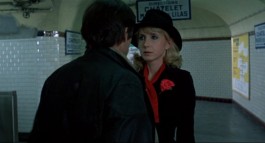


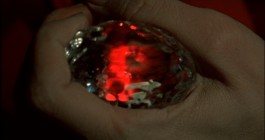
Duelle, directed by Jacques Rivette, 1976
Duelle, directed by Jacques Rivette, 1976
Duelle, directed by Jacques Rivette, 1976
Duelle, directed by Jacques Rivette, 1976
Duelle, directed by Jacques Rivette, 1976
Duelle, directed by Jacques Rivette, 1976
Duelle, directed by Jacques Rivette, 1976
Duelle, directed by Jacques Rivette, 1976
Duelle, directed by Jacques Rivette, 1976
With Duelle, Rivette felt that the utopian reality had been so backlashed and disillusioning that he wanted to create something totally fictional, almost like another planet. Even though it takes place in Paris—in the metro and other real locations—the story is like a fairy tale.
It’s about two girls, who are goddesses, coming down to earth. They want to take a magical stone that will give them mortality, because as goddesses they are immortal. They aim to experience what it means to be human, knowing it will be difficult.
There are many sequences in the metro, but unlike Akerman’s work, which is full of real people and social variety, here the metro is purely fictional. It becomes a dangerous maze where the characters are lost and struggling. The focus is entirely on the characters themselves. If you watch the film, you’ll also notice the look of the actors—they appear very much like people from the 1940s.
So they’re like ghosts, I would say—ghost people in the metro. Maybe it’s connected to the experience of the war, which was important. Rivette wasn’t living in Paris during the war, but as I mentioned, in the French imagination, the metro was also a shelter—people hiding during bombings and attacks. It seems that these characters also carry traces of that period.
So the film reflects both the illusion of the ’68 revolution, which promised change but was ultimately not fully successful, and the lingering disillusion of the war. Jean Babilée, the famous dancer, created his renowned show in 1946, just after the war, and his character in Rivette film visually echo that era—they look more like people from the ’40s than the ’70s. It’s just another way of looking at the metro. Maybe it’s not as visually radical as Akerman, but for me, it’s a very important film by a very important filmmaker.
Hochhäusler: I really think he’s one of the most adventurous of the Nouvelle Vague filmmakers. I feel strongly drawn to him. What I like is that he works a lot with the actors. They have a special role—they’re not just the embodiment of an idea he has, but they also bring their own participation, their own creativity. In a way, the actors and actresses are like mediums—they carry this ghostly quality, being both empty and nourished by their own imagination as well as the filmmaker’s. It’s all about fantasy, and in that sense, the metaphor of ghosts works very well for this movie.
Of course, if we’re talking about films about parks, we have to include—most of you probably know it—Michelangelo Antonioni’s Blow Up, his only film shot in the UK, in London. It’s like the pinnacle of ’60s modernism.
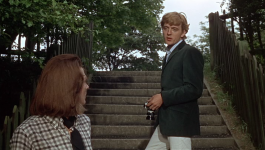
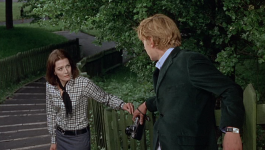
It follows a photographer, played by David Hemmings, who may have observed a crime through his camera. It’s based on a Cortázar short story. In the film, he walks through the park, but he also goes into an antique shop, and he really has no goal other than to spend time. His camera is always with him, and he observes like a hunter.
He’s hunting for an image. He’s moving aggressively, searching for something to capture and make his own. For a while, he doesn’t find anything. Then suddenly he spots a couple who seem to be in love, and he starts following them. He speeds up, hides, and begins taking many pictures, fully embodying the role of a hunter.
Eventually, the couple realizes he’s there. Vanessa Redgrave’s character pleads with him to give her the film, as if it’s urgent and intensely private—we don’t yet know her reasons. He plays with her, like a hunter with his prey. At one point, she even bites his hand in an attempt to retrieve the camera. He seems to enjoy her passion, which makes the image he’s captured even more valuable to him. Finally, she runs off. That’s the sequence.
One of the wonders of Blow-Up, I think, is this idea that you can be completely unaware of mysteries in the city. That’s very much a city concept. You’re in a park, taking pictures, and then in the darkroom, you realize you’ve captured something you didn’t notice—a hidden moment, a secret layer of the city. There are so many layers in an urban space, and you can never be entirely sure what happened or what it means. What you see can feel completely foreign to you.


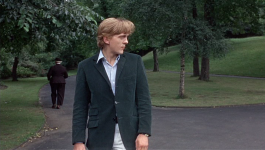
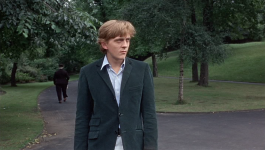


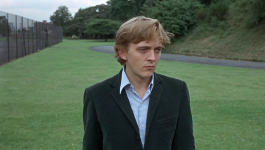
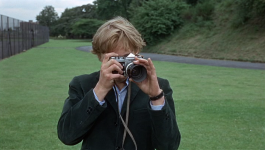
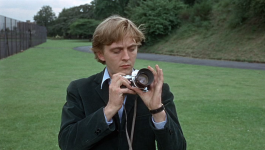


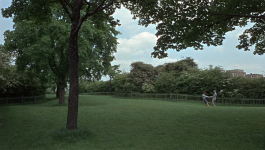






Blow-Up, directed by Michelangelo Antonioni, 1966
Blow-Up, directed by Michelangelo Antonioni, 1966
Blow-Up, directed by Michelangelo Antonioni, 1966
Blow-Up, directed by Michelangelo Antonioni, 1966
Blow-Up, directed by Michelangelo Antonioni, 1966
Blow-Up, directed by Michelangelo Antonioni, 1966
Blow-Up, directed by Michelangelo Antonioni, 1966
Blow-Up, directed by Michelangelo Antonioni, 1966
Blow-Up, directed by Michelangelo Antonioni, 1966
Blow-Up, directed by Michelangelo Antonioni, 1966
Blow-Up, directed by Michelangelo Antonioni, 1966
Blow-Up, directed by Michelangelo Antonioni, 1966
Blow-Up, directed by Michelangelo Antonioni, 1966
Blow-Up, directed by Michelangelo Antonioni, 1966
Blow-Up, directed by Michelangelo Antonioni, 1966
Blow-Up, directed by Michelangelo Antonioni, 1966
Blow-Up, directed by Michelangelo Antonioni, 1966
Blow-Up, directed by Michelangelo Antonioni, 1966
Blow-Up, directed by Michelangelo Antonioni, 1966
Blow-Up, directed by Michelangelo Antonioni, 1966
Blow-Up, directed by Michelangelo Antonioni, 1966
Blow-Up, directed by Michelangelo Antonioni, 1966
Blow-Up, directed by Michelangelo Antonioni, 1966
Blow-Up, directed by Michelangelo Antonioni, 1966
Blow-Up, directed by Michelangelo Antonioni, 1966
Blow-Up, directed by Michelangelo Antonioni, 1966
Blow-Up, directed by Michelangelo Antonioni, 1966
Blow-Up, directed by Michelangelo Antonioni, 1966
Blow-Up, directed by Michelangelo Antonioni, 1966
Blow-Up, directed by Michelangelo Antonioni, 1966
Blow-Up, directed by Michelangelo Antonioni, 1966
Blow-Up, directed by Michelangelo Antonioni, 1966
Blow-Up, directed by Michelangelo Antonioni, 1966
Blow-Up, directed by Michelangelo Antonioni, 1966
Blow-Up, directed by Michelangelo Antonioni, 1966
Blow-Up, directed by Michelangelo Antonioni, 1966
Blow-Up, directed by Michelangelo Antonioni, 1966
Blow-Up, directed by Michelangelo Antonioni, 1966
Blow-Up, directed by Michelangelo Antonioni, 1966
Blow-Up, directed by Michelangelo Antonioni, 1966
Blow-Up, directed by Michelangelo Antonioni, 1966
Blow-Up, directed by Michelangelo Antonioni, 1966
Blow-Up, directed by Michelangelo Antonioni, 1966
Blow-Up, directed by Michelangelo Antonioni, 1966
Blow-Up, directed by Michelangelo Antonioni, 1966
Blow-Up, directed by Michelangelo Antonioni, 1966
Blow-Up, directed by Michelangelo Antonioni, 1966
Blow-Up, directed by Michelangelo Antonioni, 1966
Blow-Up, directed by Michelangelo Antonioni, 1966
Blow-Up, directed by Michelangelo Antonioni, 1966
Blow-Up, directed by Michelangelo Antonioni, 1966
Blow-Up, directed by Michelangelo Antonioni, 1966
Blow-Up, directed by Michelangelo Antonioni, 1966
Blow-Up, directed by Michelangelo Antonioni, 1966
Blow-Up, directed by Michelangelo Antonioni, 1966
Blow-Up, directed by Michelangelo Antonioni, 1966
Blow-Up, directed by Michelangelo Antonioni, 1966
Blow-Up, directed by Michelangelo Antonioni, 1966
Blow-Up, directed by Michelangelo Antonioni, 1966
Blow-Up, directed by Michelangelo Antonioni, 1966
Blow-Up, directed by Michelangelo Antonioni, 1966
Blow-Up, directed by Michelangelo Antonioni, 1966
Blow-Up, directed by Michelangelo Antonioni, 1966
Blow-Up, directed by Michelangelo Antonioni, 1966
Blow-Up, directed by Michelangelo Antonioni, 1966
Orléan: Now, speaking a bit more chronologically: in the late ’70s, ’80s, and ’90s, there were more films that explored the Metro, often reflecting a contradictory fascination with technology. The Metro is a place of advanced technology, transformation, advertising, and, as I mentioned, digital imagery inside the stations.
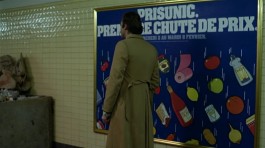
I want to focus on two films that have very different relationships to this technology. The first is The American Friend by Wim Wenders, which I find extremely interesting, even if somewhat obvious. In the middle of the film, there’s a long sequence in the Metro—a murder sequence—but I want to focus on how the film highlights the new aspects of the Metro at the time. It draws attention to technical details you don’t usually see in films, close-ups and shots that don’t serve the narrative directly, but convey the experience of the Metro.
In particular, the film explores the relationship to advertising, large-scale images, and the contrast between humans and these overwhelming visuals. In a way, these sequences reflect what was discussed at the time: the “death” or transformation of cinema in relation to television, surveillance images, and advertising, and how all of these elements create tension. It’s also a period when, after the wave of road movies, filmmakers made films dealing with death more generally. For example, later, Wenders directed Lightning Over Water which deals with the death of the famous filmmaker Nicholas Ray, and reflects some of these same concerns.
It’s all about the relationship to the death of cinema. The Metro becomes a kind of echo chamber, a grotto reflecting all these transformations. I cited images where you can see the characters’ interactions with visuals that aren’t as prominent in the other films I mentioned. The sizing, the lighting, the wording—all of these elements affect the characters, suggesting that the presence of death is already there, even if it’s not explicit.
For example, in the film, you see a newspaper announcing Henry Langlois’ death—the founder of the Cinémathèque who directed Le Metro film which I discussed earlier. All these details transform the space: advertisements, pop art, and so on. It’s not a coincidence that many of the actors are filmmakers themselves—like Daniel Schmid, the Swiss director.
Finally, the film ends with surveillance camera shots: still images taken without a filmmaker’s perspective, point of view, or framing. It’s pure technical reproduction of the world, without meaning or interpretation—just the camera itself.




The American Friend, directed by Wim Wenders, 1977
The American Friend, directed by Wim Wenders, 1977
The American Friend, directed by Wim Wenders, 1977
The American Friend, directed by Wim Wenders, 1977
The American Friend, directed by Wim Wenders, 1977
The American Friend, directed by Wim Wenders, 1977
The American Friend, directed by Wim Wenders, 1977
The American Friend, directed by Wim Wenders, 1977
The American Friend, directed by Wim Wenders, 1977
The American Friend, directed by Wim Wenders, 1977
The American Friend, directed by Wim Wenders, 1977
The American Friend, directed by Wim Wenders, 1977
The American Friend, directed by Wim Wenders, 1977
The American Friend, directed by Wim Wenders, 1977
The American Friend, directed by Wim Wenders, 1977
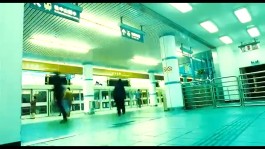
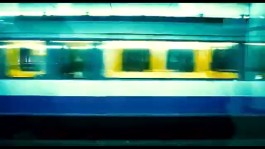
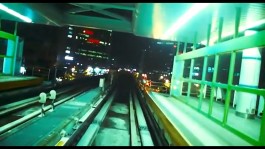
In this film, you see the characters through the lens of surveillance cameras, which is quite unique for the time the film was made, quite precocious. I also wanted to show that this fascination with technology—or this relationship to images—isn’t always linked to the death of cinema. On the contrary, in Happy Together by Wong Kar-wai, the use of lighting, advertisements, and images becomes a kind of stimulation. It’s a way to make film differently, more “impure,” mixing TV images, surveillance images, advertisements, and transforming them into something new.
All these films share a relationship to light, signs, advertisements, and movement. In Happy Together, this becomes almost a sublimation, a transformation of something solid into something fluid, like gas, like movement. The Metro, here short in Hong Kong, becomes a place of overstimulation, generating energy and emulation in its own way. It’s also more sexual—the film is a love story—and very melancholic. That’s a common thread, perhaps even with The American Friend. I’m not sure The American Friend is melancholic, but both films convey a sense of loss, of something you can’t find anymore.




Happy Together, directed by Wong Kar-Wai, 1997
Happy Together, directed by Wong Kar-Wai, 1997
Happy Together, directed by Wong Kar-Wai, 1997
Happy Together, directed by Wong Kar-Wai, 1997
Happy Together, directed by Wong Kar-Wai, 1997
Happy Together, directed by Wong Kar-Wai, 1997
Happy Together, directed by Wong Kar-Wai, 1997
Happy Together, directed by Wong Kar-Wai, 1997
Happy Together, directed by Wong Kar-Wai, 1997
Happy Together, directed by Wong Kar-Wai, 1997
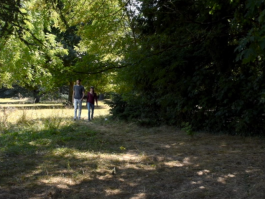
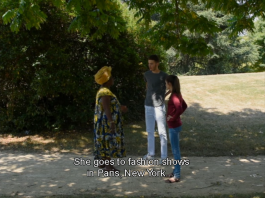
Hochhäusler: There’s a beautiful French film called Le Park by Damien Manivel. It’s actually quite hard to capture the fascination of this film because it’s a two-part work, all set in a single park. The first part takes place during the day, and the second part at night. They feel complementary in a way. The first part is deceptively simple. At first, it feels innocent, almost banal: there’s a couple in love, exploring different paths and activities, talking a little, meeting people. In the first ten minutes, you might think, “What can really happen?” And yet, a lot can happen—in the park and in the mind of someone observing it. This section is very sunny, positive. They talk, they kiss, and in a way, it evokes a Garden of Eden motif. Many parks seem to aspire to this ideal: a place like the Garden of Eden in painting, where animals are friendly, neighbors meet, and, in some cases, people can even be naked. It’s a kind of utopia, and that’s true for many parks, including in my own experience.
The film carries this utopian promise of what a park could be. She shows him a picture that feels far removed from the rest of the film—this idea of a perfect, idyllic world. Of course, some hours later, it gets dark, and other possibilities emerge. I won’t spoil what happens, but it’s really worth seeing.
The film is beautifully simple, very modestly made, yet it conveys this world of possibilities. A park, in a way, is like a city itself—a space full of potential. That’s what I loved about this film. It’s a big recommendation for a rather unknown work in Germany, but one that’s truly rewarding to watch.




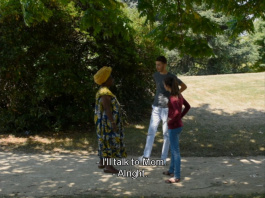


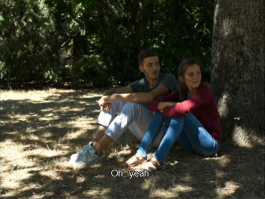


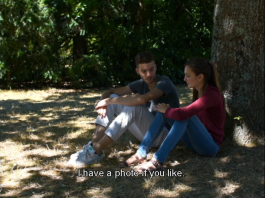
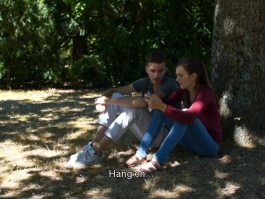


Le Parc, directed by Damien Manivel, 2016
Le Parc, directed by Damien Manivel, 2016
Le Parc, directed by Damien Manivel, 2016
Le Parc, directed by Damien Manivel, 2016
Le Parc, directed by Damien Manivel, 2016
Le Parc, directed by Damien Manivel, 2016
Le Parc, directed by Damien Manivel, 2016
Le Parc, directed by Damien Manivel, 2016
Le Parc, directed by Damien Manivel, 2016
Le Parc, directed by Damien Manivel, 2016
Le Parc, directed by Damien Manivel, 2016
Le Parc, directed by Damien Manivel, 2016
Le Parc, directed by Damien Manivel, 2016
Le Parc, directed by Damien Manivel, 2016
Le Parc, directed by Damien Manivel, 2016
Le Parc, directed by Damien Manivel, 2016
Le Parc, directed by Damien Manivel, 2016
Le Parc, directed by Damien Manivel, 2016
Le Parc, directed by Damien Manivel, 2016
Le Parc, directed by Damien Manivel, 2016
Le Parc, directed by Damien Manivel, 2016
Le Parc, directed by Damien Manivel, 2016
Le Parc, directed by Damien Manivel, 2016
Le Parc, directed by Damien Manivel, 2016
Le Parc, directed by Damien Manivel, 2016
Le Parc, directed by Damien Manivel, 2016
Le Parc, directed by Damien Manivel, 2016
Le Parc, directed by Damien Manivel, 2016
Le Parc, directed by Damien Manivel, 2016
Le Parc, directed by Damien Manivel, 2016
Le Parc, directed by Damien Manivel, 2016
Le Parc, directed by Damien Manivel, 2016
Le Parc, directed by Damien Manivel, 2016
Le Parc, directed by Damien Manivel, 2016
Le Parc, directed by Damien Manivel, 2016
Le Parc, directed by Damien Manivel, 2016
Le Parc, directed by Damien Manivel, 2016
Le Parc, directed by Damien Manivel, 2016
Orléan: When we were preparing this conference, and you were connecting the park to mythology and the idea of the Garden of Eden, you also suggested something interesting about the Metro. You said it could be seen as a metaphor for a river. Thinking in mythological terms, the Metro has something liquid about it—the circulation, the movement. If the idea of the city is to recreate aspects of natural human life, then perhaps parks are linked to the garden, to the forest, while the Metro is connected to fluidity and rivers. And it’s true—when you look at many cities, you can see this rhythm and movement. Rivers were used historically, and still are, for transportation, and the Metro carries a similar logic of circulation underground.
Hochhäusler: In many ways, cities are like world-buildings. People are always imitating what they know, and a city becomes a kind of miniature world. Everything that’s possible on Earth should be possible in a city. Some cities even have indoor skiing, for example—I love that. There is one not far from here. When you enter, you start inside a hut, and then you go outside but inside. The logic of it is beautiful—this play between interior and exterior.
Orléan: Yeah. And just to finish with this, I wanted to mention some more contemporary films. As I said, I’ve been following a roughly chronological path, from the mid-1930s to today. I wanted to quote a film by a French filmmaker named Vincent Dieutre. The film is called Jaurès. The name “Jaurès” is both a politician’s name and the name of a train station in the northern part of Paris, in an area with many immigrants living in what could be described as a European jungle or squats. Dieutre is a French filmmaker, and like Chantal Akerman, Rivette, and others I’ve mentioned, he works in the space between documentary and fiction.
In this film, the dispositif is quite simple. The story follows a man, Vincent Dieutre, who meets someone and stays at this person’s house near the train station. From the window of the flat—of his lover—you see the Metro constantly. Not as the main subject, but as a presence. The Metro frames the jungle-like squats where migrants, mainly from Sudan and Afghanistan, live.
So suddenly you get a sense of the verticality of the city, even if Paris is not so much for me vertical. But the Metro adds something extra, a kind of gradation leading down to the squat near the canal—you’ll see more in the next photo. The film is largely a voiceover of Vincent, speaking and telling the story to a woman friend. There’s a kind of dissociation between image and sound. In between these shots, you also see Vincent, the filmmaker, and the woman in a studio, recording the sound and speaking. It’s both intimate and technical at the same time.
The film alternates between sequences in Paris and sequences in the studio, but the common point is the same voice and commentary. Sometimes, when they are in the studio, they speak live; other times, the voiceover narrates the story of Vincent’ lover who is connected to the migrants. The man works with an association helping migrants get papers, food, and clothing.
He’s working with them, and he’s also helping them rewrite their stories. To get papers, they need a coherent story—proof that they are immigrants for political reasons, for instance. It’s quite sad to have to build such an efficient narrative under these circumstances, but he helps them like a scriptwriter, shaping their story to make it clearer, simpler, and more effective, so they can access their papers and improve their situation.
The film is visually very interesting. Here, you can see the Metro as part of Paris—it’s above ground in this section. There are different layers, and the camp near the canal is visible, creating a kind of gradation. The composition of the frame is varied; sometimes it focuses on the Metro and the rest of the scene is hidden, sometimes you get a broader view of the city. The Metro brings rhythm, movement and lighting, sometimes shown in close-ups, slightly disoriented, reflecting the intensity of the stories he is helping rewrite.


Jaurès, directed by Vincent Dieutre, 2012
Jaurès, directed by Vincent Dieutre, 2012
Jaurès, directed by Vincent Dieutre, 2012
Jaurès, directed by Vincent Dieutre, 2012
Jaurès, directed by Vincent Dieutre, 2012
Jaurès, directed by Vincent Dieutre, 2012
Hochhäusler: The amazing thing is that it’s all seen from this vantage point, from the apartment. What I always like about cities is that people look out of their windows and see what happens, see what passes by. And you can make a film based on this principle, basically, like Rear Window by Hitchcock.
Orléan: And there’s no crime happening, but there’s this sense of hidden crime—like the situation of the immigrants. I don’t mean at all that they are criminals. It’s exactly the contrary. The city is criminalizing their position; the city puts them here and doesn’t help them. So there’s something about criminality in this frame. And of course, in that film, the metro is not the focus, unlike the films taking place inside the metro. In a way, I felt it represents an absurd and endless movement. The question of migrants going from one place to another here seems like a pendulum: they are constantly moving from one point to another. For them, it has meaning, but the movement also gives the sequence a certain absurdity. Compared to their larger trajectory—crossing the Mediterranean, part of Africa—the metro movement becomes both metaphor and absurdity of what they live and endure. It’s a very contemporary issue.
Hochhäusler: I mean, basically there are always these two modes: you can wait for a story to come to you, or you can hunt it. And of course, you can combine both. I’ve written a short text about filming a city, which I'd like to read to you:
What kind of an object is a city?
We, must make objects speak, for we cannot bear their silence.
The tree says shake me.
In the fairy tale the bread says, take me out.
Everything must be brought to life.
What kind of object is a city?
On the one hand, it's a repository of history and stories.
The houses, streets, train stations, churches and factories represent the past. They contain it.
On the other hand, some of these stories are not yet over or are being retold. A city always means new life in old shells.
We live in the remains of other lives. Perhaps one could say that the more stories are running, the younger the city is.
Architecture, official or not, is always an expression of a concept, a program, an idea of what life should be based on previous lives, sometimes self-fulfilling prophecy.
Hardly any other art form is so vulnerable for hypocrisy, ideology and euphemisms, despite its often realistic demands.
Life, on the other hand, means criticism.
Those who live disturb you.
Bump your head.
You are alive in conflicts with ideas, plans, scripts. The past.
In Germany there are particularly many broken shells. Full of ideas of a life that have become impossible. A museum of failures. A gallery of failed system. And this can be understood as an obligation to freedom.
Kindly supported by:
Kulturamt der Landeshauptstadt Düsseldorf